

Blog
What Does Trigger Point Treatment Actually Feel Like?

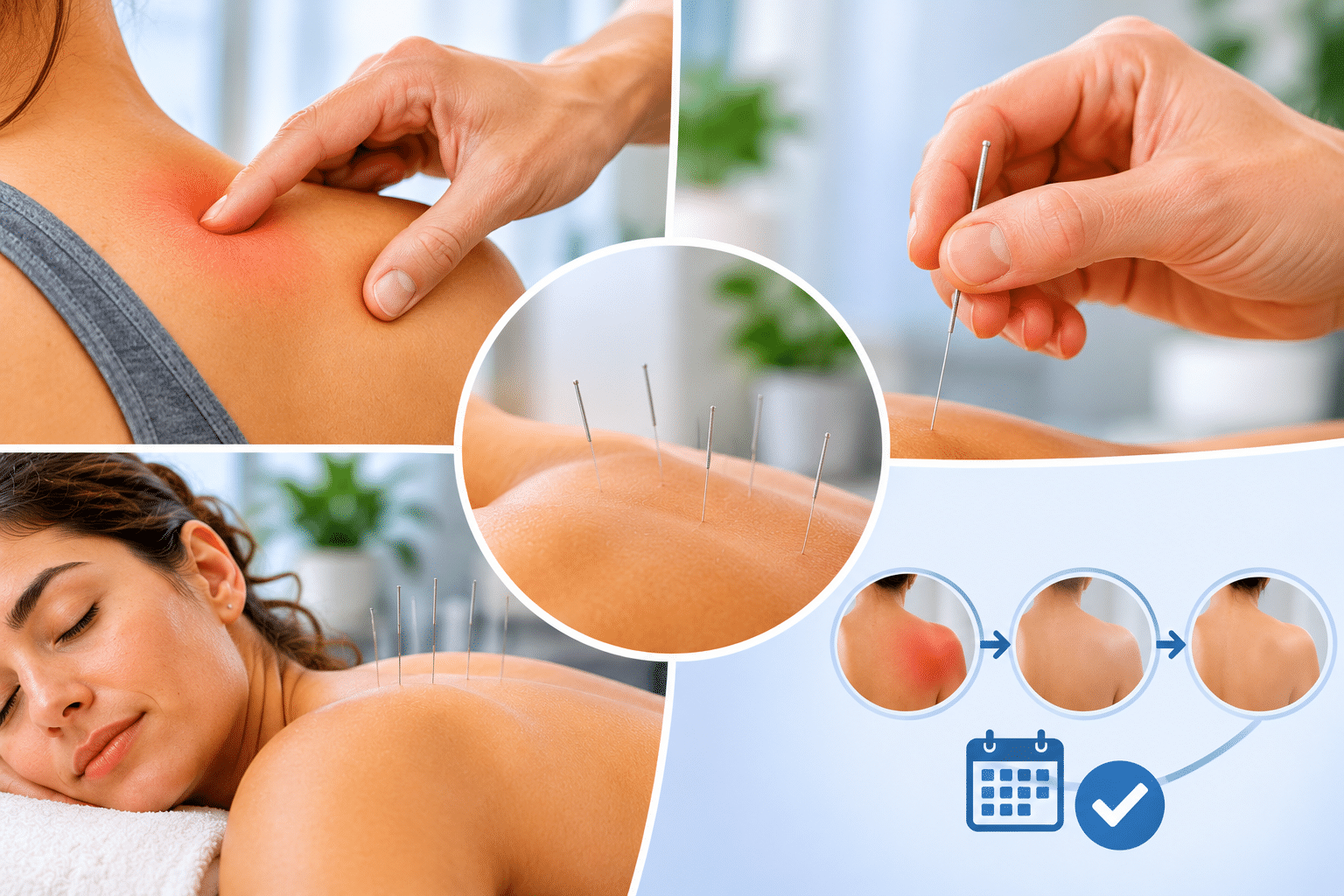
Most people who ask us about trigger point treatment aren’t asking if it works. They’ve probably already heard it from a friend, a coworker, or a running partner. What they really want to know is what it’s going to feel like.
That’s a reasonable thing to wonder before someone places a needle into a sore muscle. So, here’s an honest walkthrough, from the first insertion to the day after.
Understand What You’re Actually Treating
Trigger points are tight, hypersensitive knots in muscle tissue. They often sit deep within a muscle, feel tender when pressed, and can send pain to other areas. A knot in your upper shoulder, for example, can be the reason behind your afternoon headache.
Dry needling therapy, also known as trigger point therapy, involves the insertion of thin, sterile needles into the skin, targeting these muscular trigger points. It’s a centuries-old technique of acupuncture and East Asian medicine that has recently gained popularity and is often referred to as dry needling by the Western community.
When patients come to us for dry needling in NYC, the aim is simple: release the knot, reduce muscle tension, and restore range of motion.
Know Who Should Be Holding the Needle
This part matters more than most people realize. New York State has not adopted an official definition of dry needling, but its scope-of-practice guidance authorizes licensed acupuncturists to provide it. Physicians and dentists may also perform acupuncture after obtaining the required state certification.
Proper trigger point work depends on training in anatomy, physiology, and needle technique. Before booking, confirm that your provider is legally authorized and appropriately trained to perform needling in New York.
At Grand Madison Acupuncture, Dr. Erin Lee, DACM, L.Ac., our NYS board-certified acupuncturist, leads our trigger point sessions. She specializes in sports medicine, orthopedic disorders, and the release of active trigger and motor points.
Expect These Sensations During Your Session
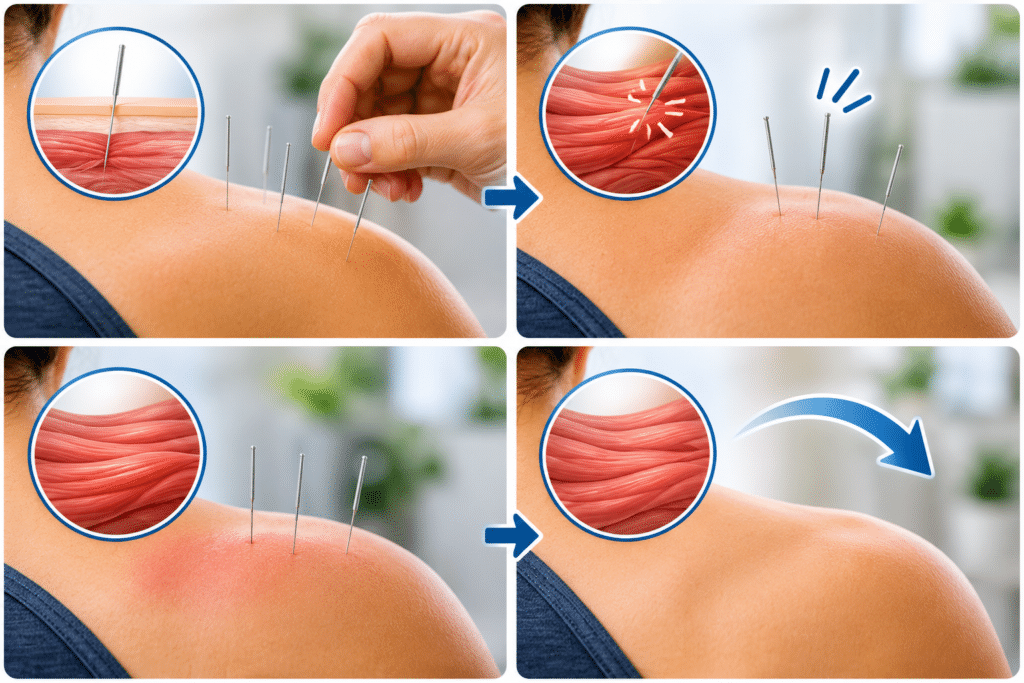
Everybody responds a little differently, but most sessions follow a familiar sequence.
The Insertion
The needles are very fine. Most patients feel a light tap, a brief pinch, or nothing at all as the needle goes in.
The Twitch
When the needle reaches an active trigger point, the muscle may give a quick, involuntary jump. We call this a local twitch response. It can feel strange the first time, but it’s brief, and it often tells us we’ve found the right spot.
The Deep Ache
You may feel a dull, heavy ache, sometimes right where your pain usually lies. Patients often describe it as “that’s the spot.” It fades quickly.
The Release
As the knot lets go, many patients notice the area soften and move more freely. We often add electroacupuncture to help speed up this release.
Research reflects this pattern. In one clinical study of patients with chronic muscle pain from trigger points, three weekly dry needling sessions targeting active trigger points in the upper trapezius, the muscle across the top of the shoulders, reduced pain and changed the status of the trigger points themselves.
Plan for the Next 24 to 48 Hours
Some soreness afterward is common, and it helps to know that in advance. Researchers describe it as the most frequent side effect of trigger point needling, usually lasting anywhere from a few hours to two or three days. In one randomized trial of patients with chronic neck pain, adding gentle electrical stimulation after needling reduced that soreness across the following three days. Patients often compare the feeling to the day after a solid workout.
To help your body recover:
- Keep moving gently rather than resting completely
- Drink plenty of water
- Apply heat if the area feels tight
- Hold off on intense training until the soreness settles
If soreness lasts beyond a couple of days, or feels sharp rather than achy, call us, and we’ll adjust your next session. Over a course of dry needling therapy in NYC, many patients find this soreness lessens as the muscle responds.
Pair Needling With Gentler Techniques
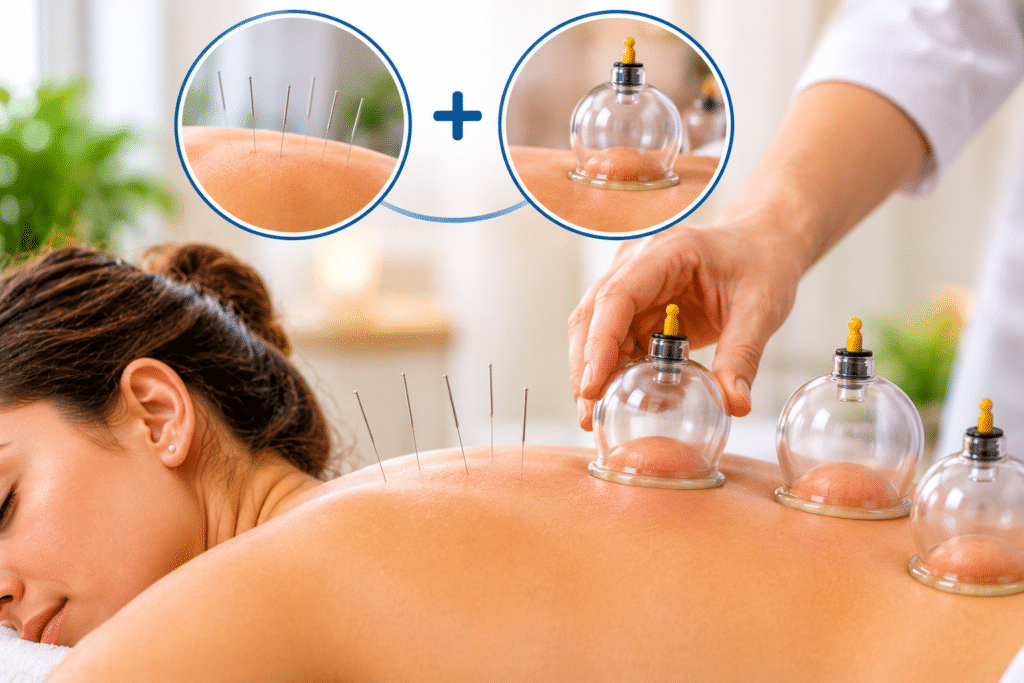
Needling is rarely the only tool in a session. We often follow it with cupping to boost circulation and ease any lingering tightness.
Where needling works deep inside the muscle, cupping uses gentle suction to lift the tissue and draw fresh blood flow to the area. It’s a soothing way to finish a session that started deep in the muscle.
Tell Us What You Feel
You’re never just lying there hoping for the best. If a sensation feels too strong, tell us. We can adjust needle depth, stimulation, and the number of points we use. First sessions are often lighter for exactly this reason.
The more you share, the better we can personalize each visit to how your body responds.
Let Your First Session Set the Pace
If you’ve been curious about trigger point work but nervous about the needles, you set the pace with us. Bring every question you have to your first visit at our Bryant Park clinic or our new Financial District location, and we’ll walk you through your first acupuncture-based trigger point session one step at a time.
Like all our care, this treatment works best alongside the guidance of your physician, not as a replacement for it.